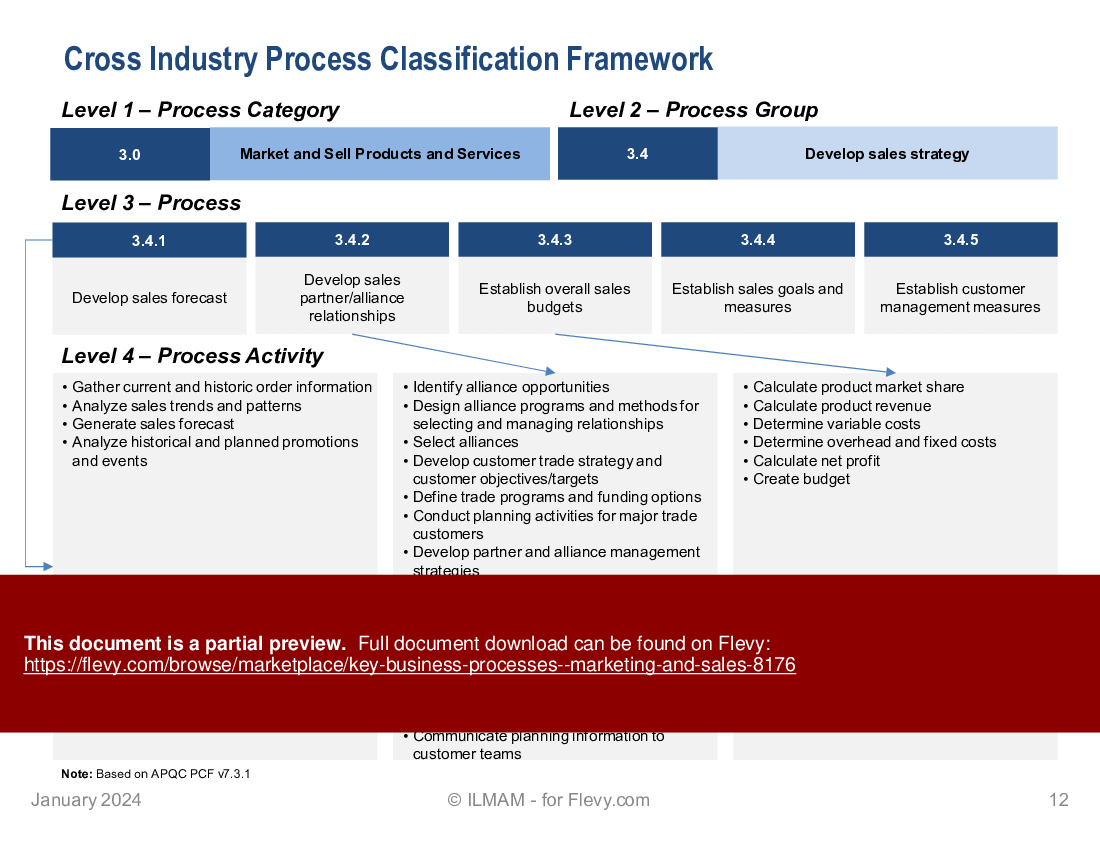
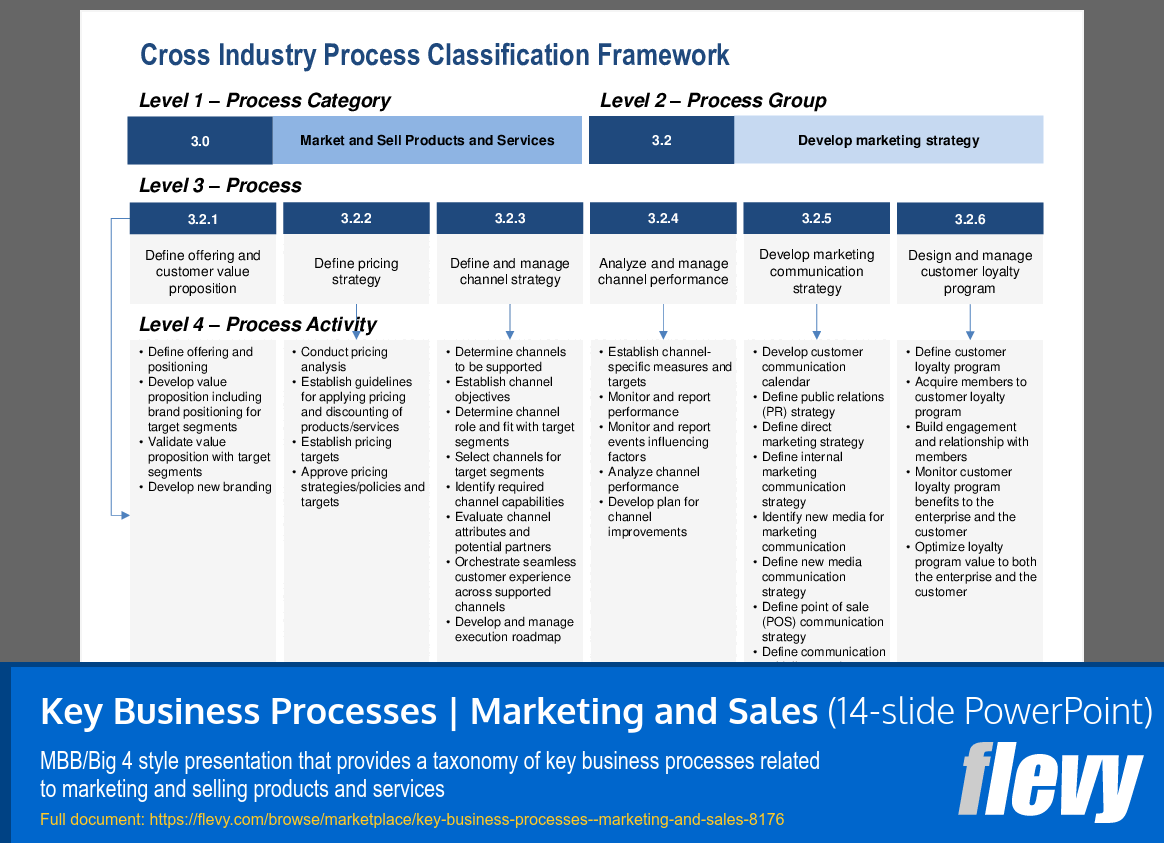
This document provides a thorough visual taxonomy of key business processes related to marketing and selling products and services based on APQC's cross-industry process classification system (PCF), the most used process framework globally.
A process classification framework can be utilized in many practical ways. For example, it can provide a:
1. framework and checklist of processes when scoping process-related projects
2. starting point for a process documentation, offering a detailed list of processes to use in process flows, maps, and/or models
3. basis for structuring a process repository, whether using a sophisticated software or simple folders
4. foundation for undertaking process-related benchmarking and generating business analytics
This document follows the structure, and facilitates the usage, of APQC's PCF v7.3.1. It includes 5 process groups, 31 processes, and 144 process activities related to marketing and selling products and services.
Contents
1. PCF Levels
2. PCF Overall Structure
3. Taxonomy for the Process Category – High Level
4. Taxonomy for the Process Category – Detailed
5. Taxonomy by Process Group – Detailed
This PPT serves as a vital resource for organizations aiming to streamline their marketing and sales processes. It breaks down complex activities into manageable components, allowing teams to focus on critical tasks that drive revenue. The detailed taxonomy equips decision-makers with the insights needed to refine strategies and enhance operational efficiency.
By leveraging this framework, businesses can ensure alignment across various functions, from understanding market dynamics to executing effective sales plans. The structured approach not only aids in process documentation, but also supports ongoing performance evaluation, enabling organizations to adapt and thrive in a rapidly changing environment.
Got a question about the product? Email us at support@flevy.com or ask the author directly by using the "Ask the Author a Question" form. If you cannot view the preview above this document description, go here to view the large preview instead.
Executive Summary
This presentation, titled "Key Business Processes | Marketing and Sales," offers a structured approach to understanding and implementing essential marketing and sales processes. Utilizing the APQC Process Classification Framework® (PCF), this resource provides a clear taxonomy that enables organizations to scope projects, document processes, and benchmark performance effectively. Executives and consultants will find this deck invaluable for enhancing operational efficiency and driving strategic marketing initiatives.
Who This Is For and When to Use
• Marketing executives responsible for strategy development and execution
• Sales leaders focused on optimizing sales processes and performance
• Business analysts involved in process documentation and improvement
• Consultants looking to implement best practices in client organizations
Best-fit moments to use this deck:
• During strategic planning sessions to align marketing and sales initiatives
• When developing or revising marketing strategies and sales plans
• For training sessions aimed at improving team understanding of key processes
• In workshops focused on process benchmarking and performance analysis
Learning Objectives
• Define the key components of the marketing and sales process taxonomy
• Develop a comprehensive marketing strategy that aligns with business goals
• Establish effective sales strategies and manage sales plans efficiently
• Analyze market opportunities and customer insights to drive decision-making
• Create and manage marketing plans that support product positioning and pricing
• Implement customer loyalty programs that enhance engagement and retention
Table of Contents
• PCF Levels (page 3)
• PCF Overall Structure (page 4)
• Taxonomy for the Process Category – High Level (page 5)
• Taxonomy for the Process Category - Detailed (page 6)
• Taxonomy by Process Group - Detailed (page 7)
Primary Topics Covered
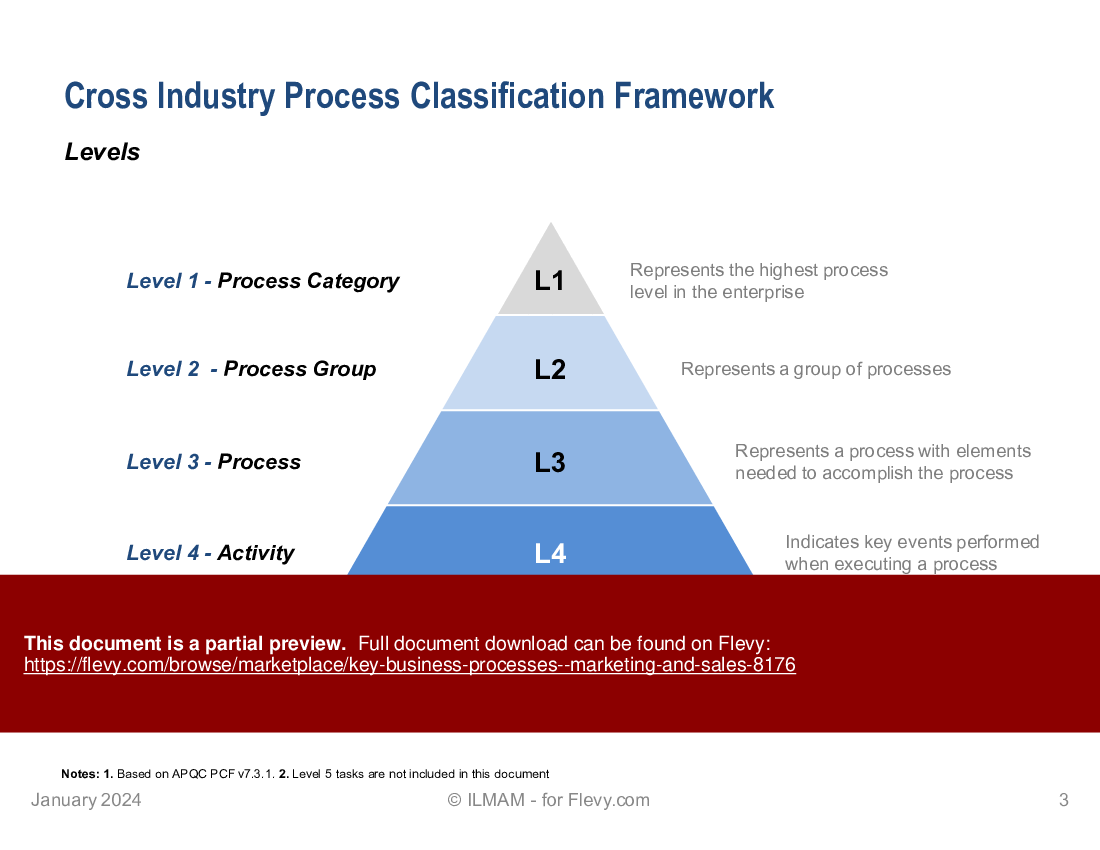
• PCF Levels - The framework categorizes processes into levels, from overarching categories to specific tasks, facilitating structured process management.
• PCF Overall Structure - This section outlines the major operating and management processes, including marketing and sales, to provide a holistic view of business operations.
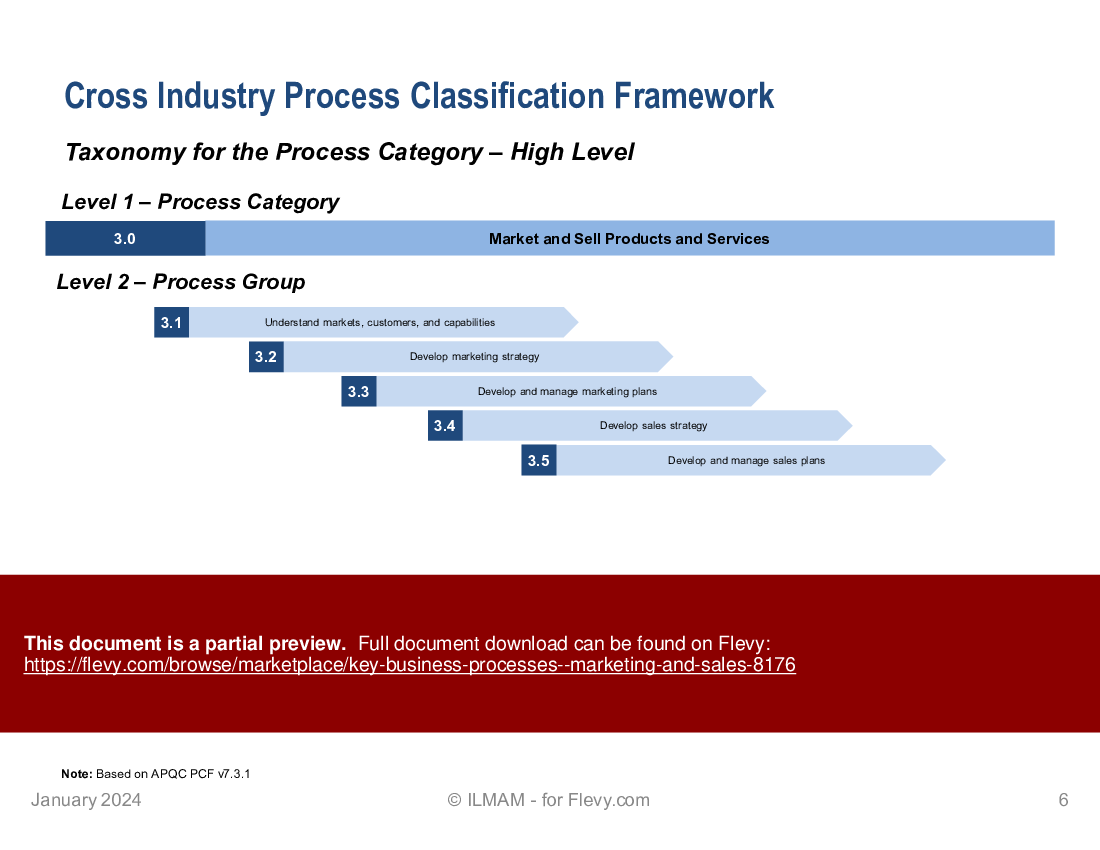
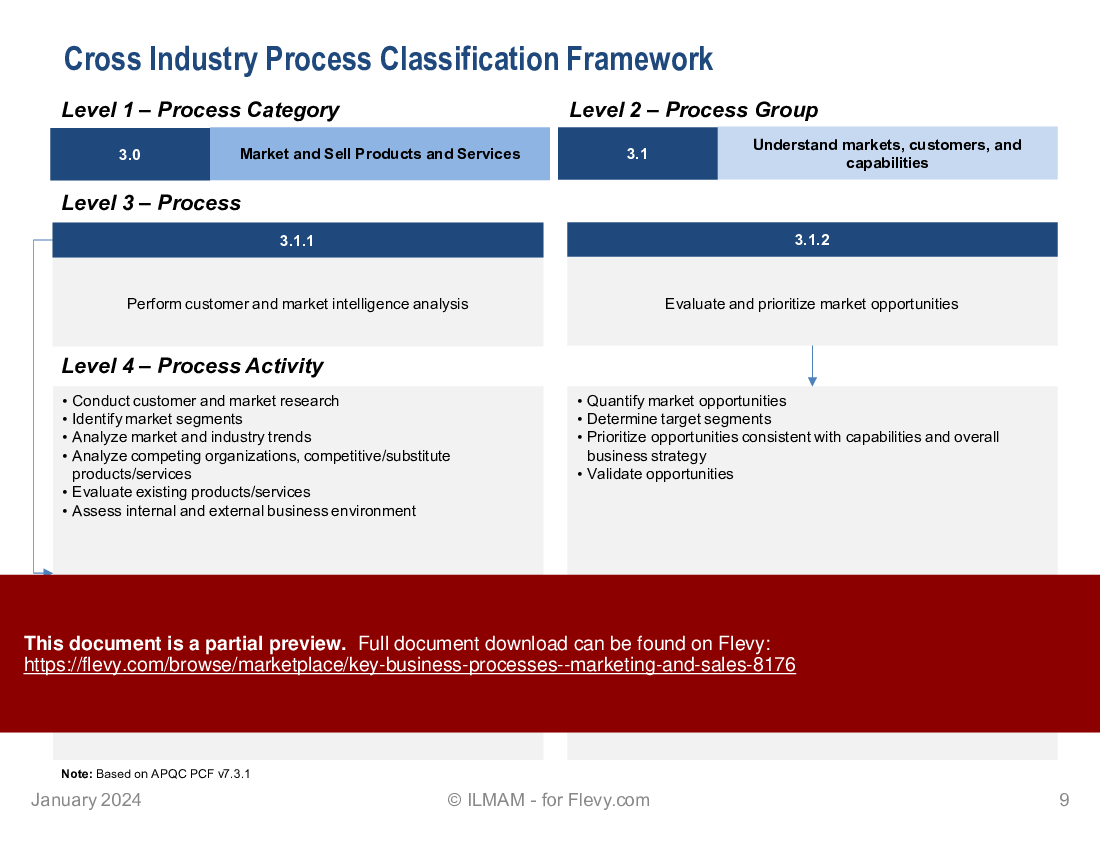
• Market and Sell Products and Services - A detailed exploration of the processes involved in marketing and selling, including understanding markets and developing strategies.
• Develop Marketing Strategy - Focuses on defining customer value propositions, pricing strategies, and marketing communications to enhance market presence.
• Develop and Manage Marketing Plans - Covers the establishment of goals, budgets, and promotional activities necessary for effective marketing execution.
• Develop Sales Strategy - Discusses the creation of sales forecasts, partner relationships, and overall sales goals to drive revenue growth.
• Develop and Manage Sales Plans - Details the processes for managing leads, customer accounts, and sales orders to optimize sales operations.
Deliverables, Templates, and Tools
• Process classification framework template for scoping marketing and sales projects
• Marketing strategy development checklist to ensure comprehensive planning
• Sales plan template to guide the establishment of sales goals and measures
• Customer loyalty program framework to enhance customer engagement
• Market analysis toolkit for evaluating opportunities and customer insights
Slide Highlights
• Overview of the PCF levels and their relevance to marketing and sales processes
• Detailed taxonomy of the marketing and sales processes, illustrating key components
• Visual representation of the relationship between marketing strategies and sales outcomes
• Framework for developing and managing effective marketing plans and sales strategies
Potential Workshop Agenda
Marketing Strategy Development Session (90 minutes)
• Review current market positioning and identify key opportunities
• Develop a comprehensive marketing strategy aligned with business goals
• Establish metrics for measuring marketing effectiveness
Sales Strategy Alignment Workshop (60 minutes)
• Analyze sales forecasts and establish sales goals
• Discuss strategies for managing customer relationships and accounts
• Create action plans for optimizing sales processes
Customization Guidance
• Tailor the marketing strategy framework to reflect specific organizational goals and market conditions
• Adjust sales plan templates to align with unique customer segments and sales channels
• Incorporate company-specific metrics and KPIs into the performance tracking sections
Secondary Topics Covered
• Market intelligence analysis techniques for understanding customer needs
• Pricing strategy development and its impact on sales performance
• Channel strategy management for optimizing distribution and sales effectiveness
• Customer loyalty program design and implementation best practices
Topic FAQ
Document FAQ
These are questions addressed within this presentation.
What is the APQC Process Classification Framework?
The APQC Process Classification Framework is an open standard that provides a structured approach to process management and benchmarking across industries.
How can this presentation help in developing marketing strategies?
It offers a detailed taxonomy and practical tools for defining marketing strategies, ensuring alignment with business objectives and market opportunities.
What are the key components of a sales strategy?
A sales strategy should include sales forecasts, partner relationships, sales goals, and measures to track performance effectively.
How can I customize the templates provided in this deck?
Templates can be tailored by incorporating specific organizational metrics, adjusting for unique market conditions, and aligning with strategic goals.
What processes are included in the marketing and sales taxonomy?
The taxonomy includes understanding markets, developing marketing strategies, managing marketing plans, and executing sales strategies.
How does the framework support benchmarking?
The framework provides a structured approach to document processes, enabling organizations to benchmark their performance against best practices.
What is the significance of customer loyalty programs?
Customer loyalty programs enhance engagement and retention, ultimately driving repeat business and increasing customer lifetime value.
How can I analyze market opportunities effectively?
Utilize market intelligence analysis techniques to evaluate market trends, customer needs, and competitive positioning.
Glossary
• APQC - American Productivity & Quality Center, an organization that promotes benchmarking and best practices.
• PCF - Process Classification Framework, a structured approach to process management.
• Market Intelligence - The process of gathering and analyzing information about markets and competitors.
• Sales Forecast - A prediction of future sales based on historical data and market analysis.
• Customer Loyalty Program - A marketing strategy designed to encourage repeat business from customers.
• Marketing Strategy - A plan for promoting and selling products or services.
• Sales Strategy - A plan for achieving sales goals and managing customer relationships.
• Process Classification - The categorization of processes to facilitate management and improvement.
• Benchmarking - The practice of comparing business processes and performance metrics to industry bests.
• Channel Strategy - The plan for how products or services will be distributed to customers.
• Pricing Strategy - The approach to setting prices for products or services based on market conditions.
• Promotional Activities - Marketing efforts aimed at increasing awareness and sales of products or services.
• Customer Insights - Information about customer preferences and behaviors used to inform marketing strategies.
• Sales Plans - Detailed outlines of sales goals, strategies, and activities to achieve revenue targets.
• Marketing Plans - Documents that outline marketing strategies, budgets, and promotional activities.
• Value Proposition - The unique value a product or service offers to customers.
• Market Segmentation - The process of dividing a market into distinct groups of buyers.
• Sales Management - The process of developing a sales strategy and managing a sales team.
• Customer Relationship Management (CRM) - Strategies and technologies used to manage interactions with customers.
• Market Analysis - The assessment of market conditions to inform business strategies.
• Competitive Analysis - The evaluation of competitors to identify strengths and weaknesses.
• Lead Management - The process of tracking and managing potential customers through the sales funnel.
• Sales Performance Metrics - Measures used to evaluate the effectiveness of sales strategies and activities.
Source: Best Practices in Sales, Marketing Plan Development, Process Maps PowerPoint Slides: Key Business Processes | Marketing and Sales PowerPoint (PPTX) Presentation Slide Deck, ILMAM - Strategy & Management Consulting
This document is available as part of the following discounted bundle(s):
Save %!
Key Business Processes | Operating Processes
This bundle contains 6 total documents. See all the documents to the right.
|
Download our FREE Strategy & Transformation Framework Templates
Download our free compilation of 50+ Strategy & Transformation slides and templates. Frameworks include McKinsey 7-S, Balanced Scorecard, Disruptive Innovation, BCG Curve, and many more. |










